
Adult-Child Interactions.
- Kirsten
- Sep 24, 2023
- 1 min read
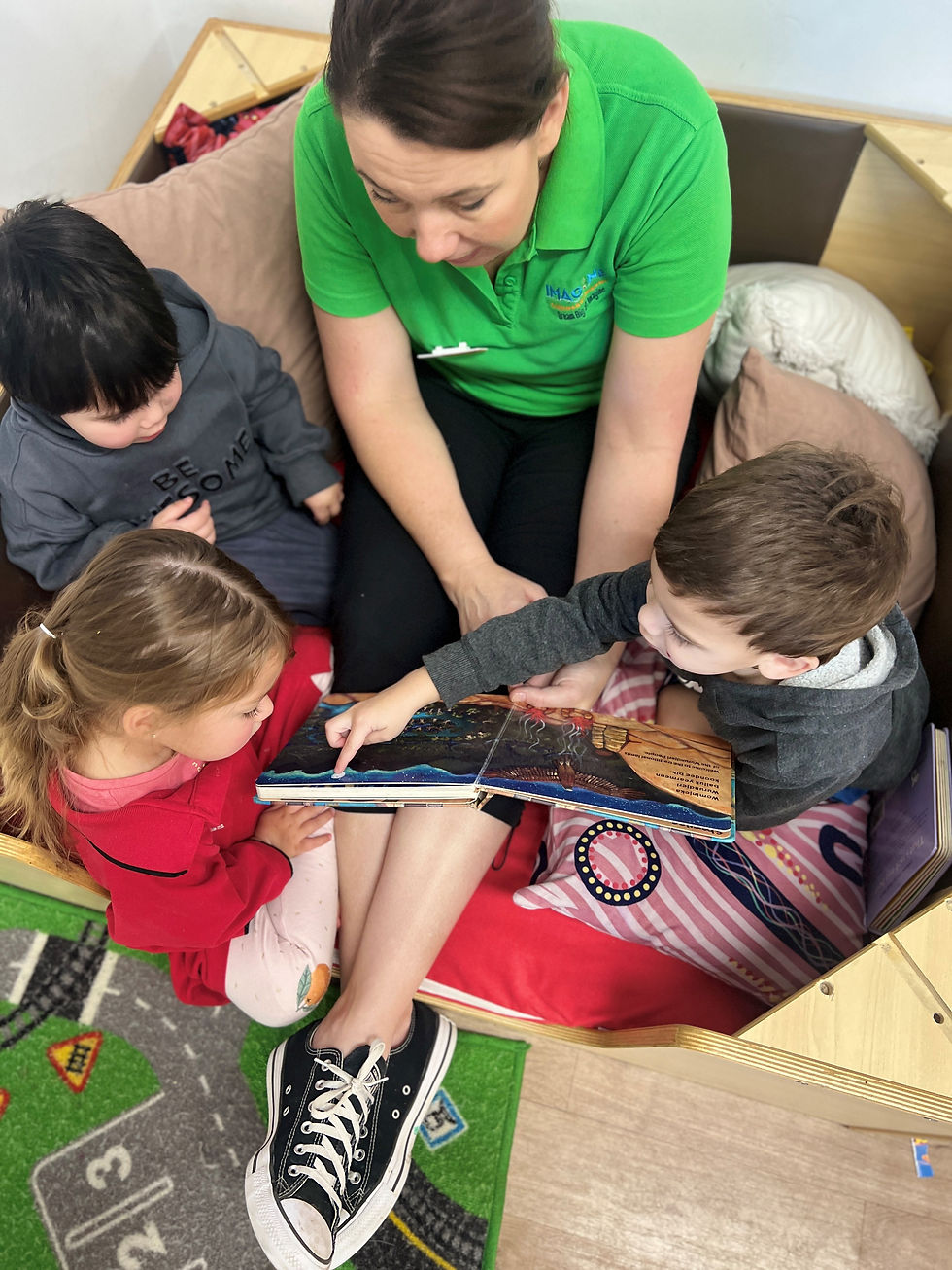
In order for 3a to be successful we must engage in individual, frequent and intentional interactions with children. But what does this mean? How do you do that with 22 children in the room? Individual, frequent and intentional interaction does not only mean one-on-one interactions with a child. This is a common misconception. Having an individual interaction with a child involves coordinating your attention toward the individual child's interests being responsive and conversing with the child. This CAN be done in small group settings ensuring each child has your individual attention (3a research recommends small groups as larger groups are not an effective way to interact with every child during learning). 3a highlights the importance of joint attention between educator and child being a powerful teaching strategy to actively promote learning and development of the children you work with. NQS Element 5.1.1 Positive educator and child interactions. NQS Element 1.2.2 Responsive Teaching and Scaffolding.


Comments